What Are the Penalties Under Colorado DUI Laws?
Colorado DUI laws can punish a first DUI with up to one year in jail, a $600 to $1,000 fine, and a nine-month license revocation.
Colorado also recognizes the lesser offense of DWAI, which generally applies at a BAC above 0.05 but below 0.08.
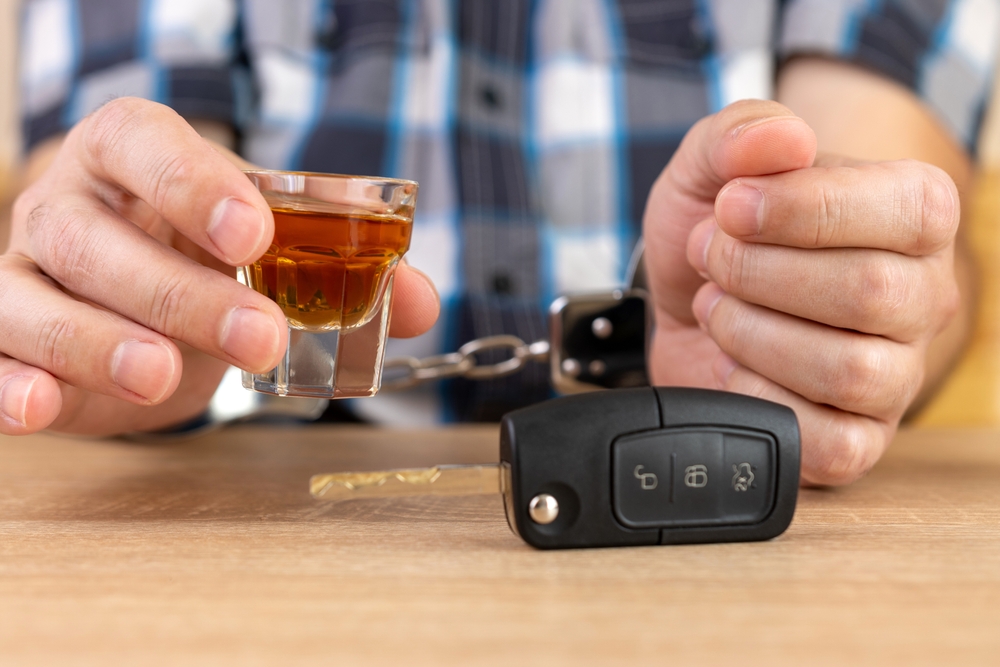
A driving under the influence (DUI) arrest in Colorado can lead to penalties like jail time, fines, and consequences for your driver’s license. State law also distinguishes between DUI and driving while ability impaired (DWAI), with different standards and penalties for each offense.
In breath-test and refusal cases, you generally have only seven days after receiving a Notice of Revocation to request a DMV hearing. In blood-test cases, the seven days generally run from when you receive the test results.
Missing your deadline can cost you the opportunity to challenge the revocation.
Key Takeaways for Colorado DUI Laws
- Colorado DUI laws create three separate charges: DUI, DUI per se, and DWAI.
- A first offense in Colorado is a misdemeanor, but a fourth or subsequent offense becomes a class 4 felony with prison exposure.
- Your license faces two independent threats after an arrest, one from the DMV and one from the criminal court.
- You have only seven days after being served a Notice of Revocation to request the DMV hearing that protects your driving privileges.
- Refusing a chemical test brings a longer revocation, a Persistent Drunk Driver designation, two years of ignition interlock, and prosecutors can use the refusal against you in court–particularly if they secured a warrant for your blood after the refusal and got test results anyway.
Colorado DUI vs. DWAI: What's the Difference?
Colorado is one of the few states that splits impaired driving between DUI (and DUI per se) and DWAI, and knowing the difference between DUI and DWAI in Colorado helps you understand what you actually face. Both appear in the same statute, C.R.S. § 42-4-1301, but they describe different levels of impairment.
A DWAI applies when alcohol or drugs affect your ability to drive to the slightest degree. It generally corresponds to a blood alcohol content (BAC) between 0.05 and 0.08.
A DUI, or Driving Under the Influence, applies when you are substantially incapable of driving safely. Prosecutors can also file a DUI per se when your BAC is 0.08 or higher, which means they don’t need to prove impairment at all. The number alone satisfies one element of the charge.
Prosecutors decide which charge to bring based on your BAC and the officer's observations. A borderline reading, a clean field sobriety performance, or a weak stop can push a case toward a DWAI or open the door to a sentence reduction in the plea offer.
A DWAI is the lesser charge, but it’s still a criminal offense with jail exposure, not a traffic ticket.
| Feature | DWAI | DUI / DUI per se |
| BAC range | Above 0.05 and below 0.08 can support an inference of DWAI | 0.08 and above (per se) |
| Standard of impairment | Impaired to the slightest degree | Substantially incapable of safe driving |
| License revocation, first offense | None automatically | 9 months |
| Points | 8 | 12 |
What Are the Penalties for a DUI in Colorado?
DUI penalties in Colorado climb sharply with each prior conviction, and the fourth offense crosses into felony territory. C.R.S. § 42-4-1307 sets the sentencing ranges.
For a first DUI offense in Colorado, penalties can include jail time, a fine, community service, alcohol education, and a nine-month license revocation. The table below compares those penalties with the steeper consequences for repeat offenses.
| Offense | Jail | Fine | License revocation | Notes |
| DWAI, first | 2 to 180 days | $200 to $500 | None automatically | 8 points, 24 to 48 hours of community service |
| DUI, first | 5 days to 1 year | $600 to $1,000 | 9 months | 12 points, 48 to 96 hours of community service; 10-day mandatory minimum if BAC is 0.20 or higher |
| DUI or DWAI, second | 10 days to 1 year | $600 to $1,500 | 1 year | 10-day minimum you must serve |
| DUI or DWAI, third | 60 days to 1 year | $600 to $1,500 | 2 years | 60-day minimum you must serve |
| Fourth or subsequent | 2 to 6 years prison | $2,000 to $500,000 | Extended | Class 4 felony under C.R.S. § 42-4-1301(2)(a) |
A few things soften or sharpen these numbers in practice. On a first DUI with a BAC under 0.20, a judge often suspends the minimum jail time in favor of probation, community service, and alcohol education.
On a second or third offense, the minimum jail time is mandatory, and a judge can’t simply waive it, though work release or in-home detention may be available for a second offense, and work release may be available for a third.
Colorado DUI License Suspension: Two Separate Processes
Here’s the part that surprises almost everyone: A Colorado DUI license suspension comes from two completely independent tracks, and you can lose your license through one even if you win the other.
The first track is administrative. Following a qualifying breath test or refusal, the officer generally serves a Notice of Revocation that begins the administrative license-revocation process, entirely apart from what happens in court.
The administrative revocation is governed by C.R.S. § 42-2-126. The second track is criminal. A DUI or DUI per se conviction can carry its own license revocation, while a DWAI conviction carries points and can contribute to license consequences.
Since the DMV track is automatic and fast, it creates the single most urgent deadline in your whole case.
You have 7 days to protect your license. When a breath test shows a BAC of 0.08 or higher, or you refuse testing, you typically surrender your license and receive a Notice of Revocation, which serves as a temporary permit. From that point, you have only 7 days to request a hearing with the DMV. If you provide a blood sample and the result is a BAC of 0.08 or higher, you will receive the Notice in the mail. Be sure to read the Notice carefully to determine the deadline to request a hearing or consult with an attorney.
This hearing is separate from your criminal case, and requesting it is often the best opportunity to save your driving privileges. If you miss that window, the revocation takes effect automatically, and you lose the chance to contest it.
At the DMV hearing, an attorney can appear for you, question the arresting officer, and look for procedural or evidentiary problems that can undo the revocation.
Winning it doesn’t resolve the criminal case, and a later DUI conviction can still create a separate license consequence even if you win the DMV hearing.
What Happens After a Colorado DUI Arrest?
After a Colorado DUI arrest, the case usually moves through several stages in court while a separate driver’s license process moves forward through the DMV. The two tracks follow different timelines, so the steps can overlap.
The process usually includes:
- Booking and Bond: The police book you after the arrest. You then post bond or are released on your own recognizance, often within a day.
- DMV Hearing Deadline: The seven-day window to request a hearing generally begins after a breath test or refusal, or after you receive the results of a blood test. Missing the deadline can prevent you from challenging the license revocation.
- Arraignment: At your first court appearance, you hear the formal charges and may enter a plea of guilty, not guilty, or no contest.
- Pretrial Proceedings: Your attorney reviews the evidence, files appropriate motions, challenges issues with the stop or testing when supported by the facts, and negotiates with the prosecutor.
- Case Resolution: The case can be resolved through a plea agreement, be dismissed, or proceed to trial. If there is a conviction, sentencing follows.
Many first DUI cases in Colorado resolve before trial, often after the evidence has been reviewed for challenges. The criminal case and DMV process continue on separate tracks throughout the case.
Colorado's Express Consent Law and Refusing a Test
Colorado's Express Consent law says that by simply driving on state roads, you have already agreed to take a chemical test when an officer has probable cause to believe you’re impaired. Refusing that test carries its own consequences, and they are steep.
A first refusal triggers an automatic one-year license revocation, longer than the nine months that a first DUI test result brings. A refusal also labels you a Persistent Drunk Driver (PPD), which requires two years of ignition interlock once you become eligible to reinstate.
If you have already refused, that doesn’t end your options, and a lawyer can still challenge whether a valid refusal actually occurred.
What Is a Persistent Drunk Driver Designation in Colorado?
A Persistent Drunk Driver designation adds separate license-related requirements beyond the underlying driving under the influence (DUI) or driving while ability impaired (DWAI) case.
You can receive the designation for a blood alcohol content (BAC) of 0.15 or higher, refusing a chemical test, or having multiple alcohol-related violations.
A high BAC or refusal can trigger the designation even on a first offense. The PDD designation can require Level II alcohol and drug education and treatment, and at least two years of ignition interlock restrictions after driving privileges are restored.
Because the Colorado Division of Motor Vehicles handles the designation administratively, these requirements can apply separately from the outcome of the criminal case.
Can a Colorado DUI Be Reduced or Dismissed?
A DUI charge is not a conviction, and Colorado law gives a defense attorney several places to push back. The stop itself is a common starting point, because an officer needs a valid legal reason to pull you over, and a bad stop can lead a judge to suppress everything that followed.
The arrest requires probable cause, which is also contestable. Field sobriety tests depend on proper administration and are affected by nerves, injuries, footwear, and road conditions. In some cases, evidence that you drank alcohol after you stopped driving can undermine the charge.
Breath machines require careful calibration and maintenance, and gaps in those records can undermine a reading. Blood test evidence can be challenged based on problems with the chain of custody or laboratory procedures.
Weakenesses in the prosecution’s case can support a reduction from DUI to DWAI, or, in the right circumstances, a dismissal.
Your Next Step
A DUI arrest is a serious moment, but it’s a process with clear rules, real defenses, and a path forward. A first offense can feel overwhelming, but for most people the case can be resolved without the worst outcomes they feared.
What determines how it goes often comes down to what you do in the first week, starting with that seven-day license deadline. Price Criminal Defense handles DUI and DWAI cases across Denver.
Call us for free at (720) 615-7106 or reach us through our contact form, and we’ll explain exactly where your case stands and what to do next.
FAQ for Colorado DUI Laws
How Long Does a DUI Stay on Your Record in Colorado?
A Colorado DUI conviction remains part of your criminal record, and Colorado DMV records can include your full driving history. Adult DUI, DUI per se, and DWAI convictions generally can’t be sealed.
Is a First DUI a Misdemeanor in Colorado?
A first, second, or third DUI or DWAI is generally a traffic misdemeanor in Colorado. A fourth or subsequent qualifying offense is a class 4 felony, which can carry prison time.
Can I Drive After a DUI Arrest in Colorado?
You can sometimes continue driving temporarily after a DUI arrest, depending on the notice issued and whether your license was surrendered. A Notice of Revocation can serve as a valid license for seven days, during which you can request a DMV hearing.
If your license is later revoked, you could qualify for early reinstatement with an ignition interlock device.
Do I Need a Lawyer for a First DUI?
Colorado doesn’t require you to hire a lawyer for a first DUI, but you have the right to consult and hire one. An attorney can review the stop and testing evidence, represent you in the criminal case, and help address the separate DMV process.
What Is an Ignition Interlock Requirement?
An ignition interlock is a breath-testing device connected to your vehicle that requires an alcohol-free breath sample before the engine will start. The length of an interlock requirement depends on the type of revocation, your driving history, and whether you qualify for early reinstatement.
Drivers designated as Persistent Drunk Drivers, including certain drivers with a high blood alcohol content or a chemical-test refusal, can face a minimum two-year interlock restriction.
How Much Does a DUI Cost in Colorado?
A first DUI carries a statutory fine of $600 to $1,000, but the total financial impact can be higher once other required expenses are added. Those expenses can include court costs, alcohol education or treatment, probation supervision fees, ignition interlock fees, proof-of-insurance requirements, and license reinstatement fees.
The total varies based on the case and the requirements imposed.

Daniel Butler
Director of Criminal Defense
Dan Butler has over 15 years of experience as an attorney in Colorado, nearly a decade of which has been spent in the criminal justice system. Before defending clients, Dan Butler prosecuted and supervised prosecutors in both Denver and Durango—learning and writing the playbook from the inside.
Author's Bio