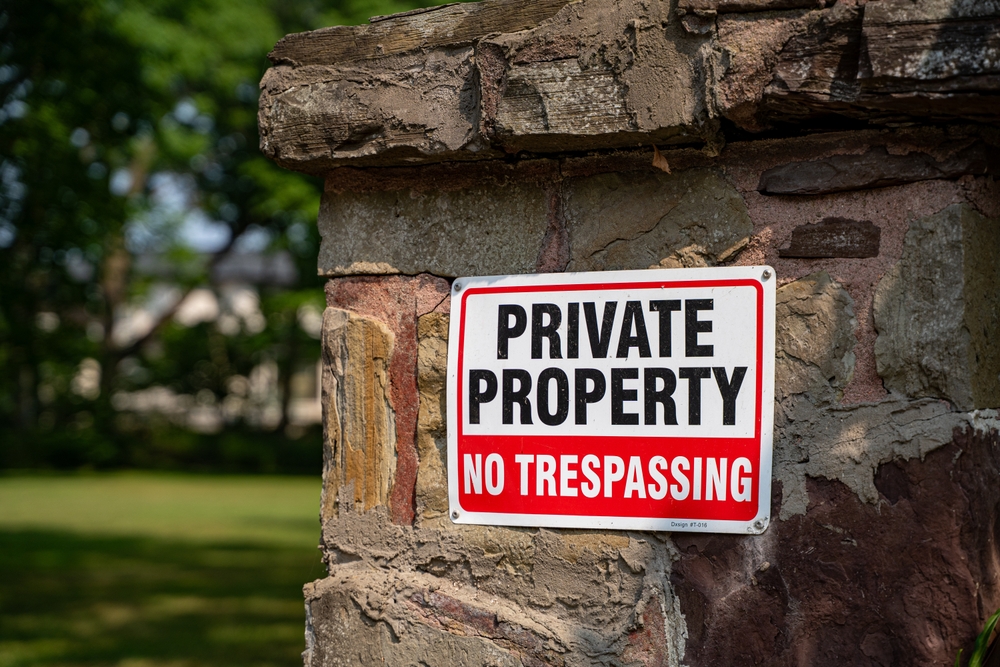
Criminal trespass in Colorado covers far more than sneaking onto private land. It reaches everything from stepping into a fenced yard to remaining in a store after being asked to leave. The severity of the charge depends entirely on where you were and why.
A trespassing lawyer in Denver can assess the degree of the charge, identify available defenses, and help protect you from the consequences of a conviction. Call (720) 615-7106 or reach out online for a free consultation.
What Is Criminal Trespass in Colorado?
Criminal trespass means unlawfully entering or remaining on property that isn't yours. You generally have to lack permission to be there, and in many settings that requires some form of notice, whether a posted sign, a fence, a locked door, or a direct order to leave.
Walking across an open, unmarked field is treated very differently from slipping into someone's home, and the statute sorts those situations by degree.
Intent matters too. Trespass is about being somewhere you shouldn't be; entering or remaining unlawfully with the intent to commit another crime can lead to a more serious charge, such as burglary.
The Three Degrees of Criminal Trespass in Colorado
The three degrees track the type of property involved, from a home to open land. The table below reflects current Colorado law for non-felonies, which was rewritten in 2022 — an important detail, because many older summaries still list outdated penalties.
| Degree | Typical situation | Classification | Maximum exposure |
| First Degree | Entering or remaining in a dwelling | Class 1 misdemeanor | Up to 364 days jail |
| First Degree | Entering a vehicle intending to commit a crime inside | Class 1 misdemeanor | Up to 364 days jail, $1,000 |
| Second Degree | Fenced or enclosed premises; common areas of a hotel, condo, or apartment | Petty offense | Up to 10 days jail, $300 |
| Second Degree | Entering another person's motor vehicle | Class 2 misdemeanor | Up to 120 days jail, $750 |
| Third Degree | Any other unenclosed premises | Petty offense | Up to 10 days jail, $300 |
Most everyday trespass — a fenced lot, an apartment lobby, open land — sits at the petty or misdemeanor level. The charge climbs sharply only when a home or criminal intent enters the picture.
When Does Trespass Become a Felony in Colorado?
Trespass turns into a felony in a narrow set of circumstances, and knowing them tells you how much is really at stake. Entering an inhabited or occupied dwelling elevates first-degree trespass to a class 6 felony, the most common felony version by far.
Agricultural land carries its own enhancement: trespassing on farm or ranch property with the intent to commit a felony can be charged as a felony in its own right.
And when the entry is paired with intent to commit a separate crime, prosecutors often reach past trespass entirely and charge burglary.
Charges Frequently Filed With Criminal Trespass
Trespass sometimes does not get charged alone, and the added charges are often what raise the stakes. The most important one to understand is burglary. Second-degree burglary can involve unlawfully entering or remaining in a building or occupied structure with the intent to commit a crime inside.
That criminal intent can separate trespass from burglary, which is why the characterization of the entry matters so much.
Other charges cluster around trespass depending on the setting. Property damaged during an entry can bring a separate criminal mischief count. A person who returns to a business after being formally banned can face trespass stacked onto the original retail theft case.
Entering a home in violation of a court order can generate both a trespass charge and a separate protection-order violation.
Common Defenses to Criminal Trespass in Denver
A trespass charge in Denver often has more give in it than people expect, and several defenses come up again and again. Lack of adequate notice is a frequent one. If the property wasn't posted, fenced, or otherwise closed off, the state may struggle to show your presence was unlawful.
Consent or a genuine license to be there defeats the charge outright. For the more serious degrees, the absence of criminal intent can pull the case down to a lesser offense.
Trespass and Protection Orders in Colorado
When a protection order is in place, going to the wrong address can trigger two charges at once. Returning to a shared home or entering a protected person's property in violation of an order can result in a trespass charge, along with a separate count for violating the protection order itself.
These situations move fast and are easy to stumble into during an emotional stretch, and because the two charges compound against each other, they’re worth taking seriously from the very first court date.
Hit With Criminal Trespass in Denver?
Most Denver criminal trespass cases are handled in Denver County Court, while lower-level cases are often handled in the city's municipal courts instead. Either way, the first appearance sets the tone, and the degree charged can frequently be contested before things harden into a plea.
Price Criminal Defense can step in early, deal with the prosecutor, and work to keep a difficult moment from becoming a lasting record. Call (720) 615-7106 any time, day or night, or send your details through our online form.
FAQ for Criminal Trespass in Colorado
Is Trespassing a Felony in Colorado?
Some Colorado trespass charges are felonies, but many are misdemeanors or petty offenses. The level of the charge depends on the property involved and the circumstances of the alleged entry.
Can I Be Charged With Trespassing if There Were No Signs Posted?
You can still face a trespass charge without posted signs. A Denver trespassing lawyer can examine whether you had notice that entry or remaining on the property was unlawful.
What Is the Difference Between Trespassing and Burglary?
Second-degree burglary requires unlawful entry or remaining with intent to commit another crime, while trespass doesn’t require that additional criminal intent. That distinction can significantly change the seriousness of the charge. A trespass attorney in Denver can help you understand your options.
Can a Store Ban Me From Coming Back?
A private business can generally tell you not to return, and coming back after receiving notice can support a trespass allegation. A Denver trespassing lawyer can examine whether the store clearly communicated the ban and whether the prosecution can prove that notice was given.
Will a Trespass Charge in Colorado Stay on My Record?
A trespass charge or conviction can appear on your criminal record, but some cases can later qualify for sealing. Eligibility depends on how the case ends and the offense involved.