Colorado Domestic Violence Cases Usually Begin With an Underlying Criminal Charge
In Colorado, domestic violence is not a separate crime. Instead, it is a label added to another criminal charge if the alleged actions involve a qualifying intimate relationship. Under C.R.S. § 18-6-800.3, domestic violence includes an act or threatened act of violence against a person with whom the accused is or has been involved in an intimate relationship. It can also include crimes against a person, property, or an animal when the alleged conduct is used as a method of coercion, control, punishment, intimidation, or revenge against a person in an intimate relationship. Colorado defines an intimate relationship to include spouses, former spouses, past or present unmarried couples, and people who are the parents of the same child. This means the main charge could be assault, harassment, criminal mischief, menacing, stalking, violating a protection order, or another crime. The domestic violence label can then lead to extra procedures and sentencing rules.Police May Be Required to Make an Arrest
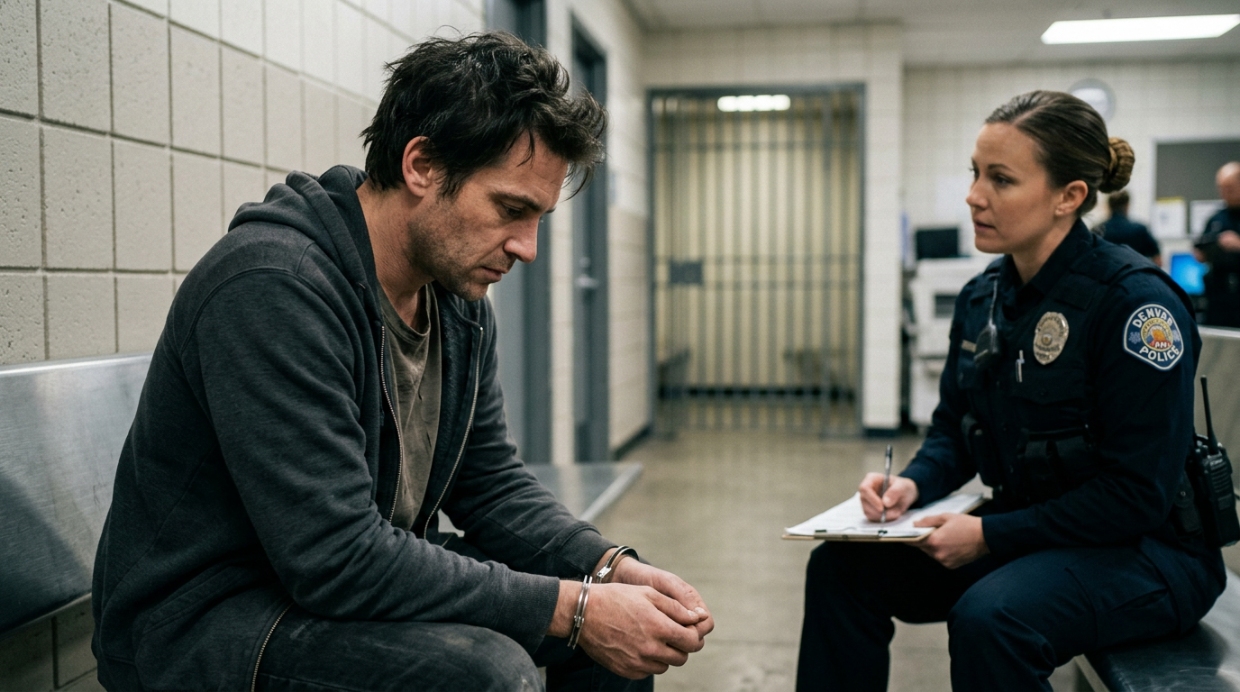
A key difference in Colorado domestic violence cases is the state’s rule that often requires police to make an arrest. Under C.R.S. § 18-6-803.6, when a peace officer determines that there is probable cause to believe that a crime involving domestic violence has been committed, the officer must arrest the person suspected of committing it without undue delay. The statute does not require officers to arrest both people simply because each claims to be the victim. Once police arrive and find probable cause, the situation is mostly out of your control. Even if the argument is over or the other person says an arrest is not needed, the officer may still have to take someone into custody by law. We therefore pay close attention to what officers relied upon when deciding probable cause existed. Body-camera footage, 911 recordings, witness statements, photographs, text messages, physical injuries, and inconsistent statements can all become important.What Happens After You Are Taken Into Custody?
After an arrest, the accused may be transported to jail for booking and processing. The case then moves toward an initial court appearance, where the judge can address release conditions, bond, and a mandatory criminal protection order. The exact timing and release process can depend on the charge, criminal history, alleged facts, and other circumstances. A person accused of domestic violence should not assume that the case will simply disappear if the alleged victim later changes their mind. Once charges are filed, the prosecution controls the criminal case. The alleged victim may have input, but the prosecutor decides whether to continue pursuing the charges.A Mandatory Protection Order Can Restrict Contact Immediately
Under C.R.S. § 18-1-1001, a mandatory protection order applies to a person charged with a criminal offense and generally remains in effect through the final disposition of the case. The order prohibits conduct such as harassing, intimidating, retaliating against, or tampering with an alleged victim or witness. In domestic violence cases, the court can impose additional restrictions, including requiring the accused to stay away from the alleged victim’s residence or other locations. Before release on bond in a domestic violence case, the court must state the terms of the protection order on the record, and the defendant must acknowledge the order before release. This can create immediate practical problems. You may be told not to return to your own home. You may be prohibited from calling, texting, emailing, or communicating through another person. If children are involved, family arrangements can become more complicated. We advise clients to treat every term of the protection order literally. A violation can create an additional criminal case under C.R.S. § 18-6-803.5.The Alleged Victim Cannot Simply “Drop the Charges”
One of the most common questions we hear after a domestic violence arrest is whether the alleged victim can withdraw the accusation and end the case. Once the government files charges, the criminal case belongs to the prosecution. The alleged victim can communicate with prosecutors, provide additional information, or explain that earlier statements were inaccurate, incomplete, or made during an emotional situation. That does not automatically terminate the case. Prosecutors may attempt to move forward using other evidence, including 911 calls, officer testimony, photographs, medical records, body-camera recordings, text messages, social media communications, or witness statements. For us, that makes early evidence review especially important. We want to know what evidence actually exists rather than relying only on the original accusation.Domestic Violence Cases Can Involve Serious Sentencing Requirements
In Colorado, a person convicted of a criminal offense whose factual basis includes domestic violence can be ordered to complete a domestic violence evaluation and treatment program that meets Colorado’s statutory standards. The punishment for the underlying offense depends on what charge was filed. An assault allegation, for example, can carry very different potential penalties from harassment or criminal mischief. Colorado also has enhanced consequences for people with repeated domestic violence convictions. A misdemeanor offense involving domestic violence may become a class 5 felony if the defendant has three or more qualifying prior domestic violence convictions arising from separate criminal episodes. That is one reason we look carefully at both the current allegation and any prior record.We Examine Whether the Evidence Supports the Accusation
A domestic violence arrest does not establish guilt. Police often arrive after an emotionally charged situation and must make decisions based on limited information. We may examine whether the physical evidence matches the accusation, whether witnesses gave conflicting statements, whether injuries are consistent with what was reported, whether self-defense applies, and whether the person identified as the aggressor was actually defending themselves. We may also review whether statements were taken out of context, whether text messages show a different version of events, whether video contradicts the police report, or whether the prosecution can prove the underlying criminal offense beyond a reasonable doubt. The defense strategy must be based on the specific evidence rather than assumptions about what happens in domestic violence cases.Denver Domestic Violence Arrest FAQs
Will We Have to Stay in Jail After a Domestic Violence Arrest?
Not necessarily, but a domestic violence arrest generally requires booking and a court process before release conditions are fully established. Depending on the circumstances, the court may address bond, protection-order restrictions, no-contact provisions, and other conditions before release. Colorado law requires defendants in domestic violence cases to be advised of the terms of the applicable protection order before release on bond. C.R.S. § 18-1-1001 requires the defendant to acknowledge those terms in court and in writing. We recommend paying close attention to every condition because misunderstanding a protection order can result in a new charge.Can We Go Back Home After We Are Released?
That depends on the protection order and bond conditions. A court can order a defendant to stay away from the alleged victim’s residence and from other places where the alleged victim is likely to be found. If the order prohibits returning home, going back without court authorization can create another legal problem even if your name is on the lease, deed, or mortgage. If access to the home is necessary to obtain clothing, medication, work equipment, or other belongings, we can examine lawful ways to address the issue without violating the court’s order.What Happens If the Alleged Victim Wants Contact?
The court’s order controls, not the wishes of the alleged victim. If the protection order prohibits contact, responding to a phone call, text message, social media message, or invitation to meet can still expose the defendant to allegations of violating the order. C.R.S. § 18-6-803.5 makes certain violations of protection orders criminal offenses. If circumstances change, a defendant can ask the court to modify the protection order. C.R.S. § 18-1-1001 permits requests for modification, but the defendant should wait for the judge to change the order rather than relying on informal permission from another person.Can Domestic Violence Charges Be Dismissed?
Yes, a domestic violence-related case can be dismissed when the prosecution determines that the evidence is insufficient, legal problems undermine the case, or another valid basis for dismissal exists. However, dismissal is not automatic because the alleged victim asks for it. We may challenge whether police had probable cause, whether the prosecution can prove the underlying offense, whether self-defense applies, whether witness statements are reliable, or whether physical and digital evidence contradicts the accusation. The correct approach depends on the facts of the case.What Happens If We Are Accused of Violating the Protection Order?
A protection-order violation can create a separate criminal charge. Under C.R.S. § 18-6-803.5, prohibited contact, harassment, threats, entry into restricted locations, or other conduct barred by an enforceable protection order can result in additional prosecution. We therefore encourage clients to keep a copy of the order, understand its exact terms, and avoid assuming that indirect contact is permitted. Communication through relatives, friends, social media, or another intermediary can create problems depending on the wording of the order.Will We Have to Complete Domestic Violence Treatment?
A conviction for an offense whose factual basis includes domestic violence can require an evaluation and treatment program under C.R.S. § 18-6-801. Colorado uses approved domestic violence treatment standards, and the evaluation can influence the level and length of treatment required. Treatment requirements can involve substantial time and expense. This is another reason we consider the domestic violence designation itself when evaluating a case, not only the underlying criminal charge.Speak With a Denver Criminal Defense Lawyer at Price Criminal Defense
A domestic violence arrest can affect your freedom, your home, your family relationships, and your criminal record almost immediately. At Price Criminal Defense, we review the entire case, including the initial 911 call, police reports, body-camera recordings, witness statements, photographs, medical evidence, digital communications, and the conduct of law enforcement. Our domestic violence defense attorney, Daniel Butler, has more than 15 years of experience practicing law in Colorado and spent a decade working within the Colorado criminal justice system before defending people accused of crimes. Call Price Criminal Defense at (720) 615-7106 for a free consultation. Calls are answered 24/7, and we represent clients in and throughout the Denver area from our office locations in Denver, Colorado.
Daniel Butler
Director of Criminal Defense
Dan Butler has over 15 years of experience as an attorney in Colorado, nearly a decade of which has been spent in the criminal justice system. Before defending clients, Dan Butler prosecuted and supervised prosecutors in both Denver and Durango—learning and writing the playbook from the inside.
Author's Bio