Home > Blog > Denver Municipal Court: What to Expect If You’re Facing a Criminal Charge
October 29, 2026 | By Price Criminal Defense
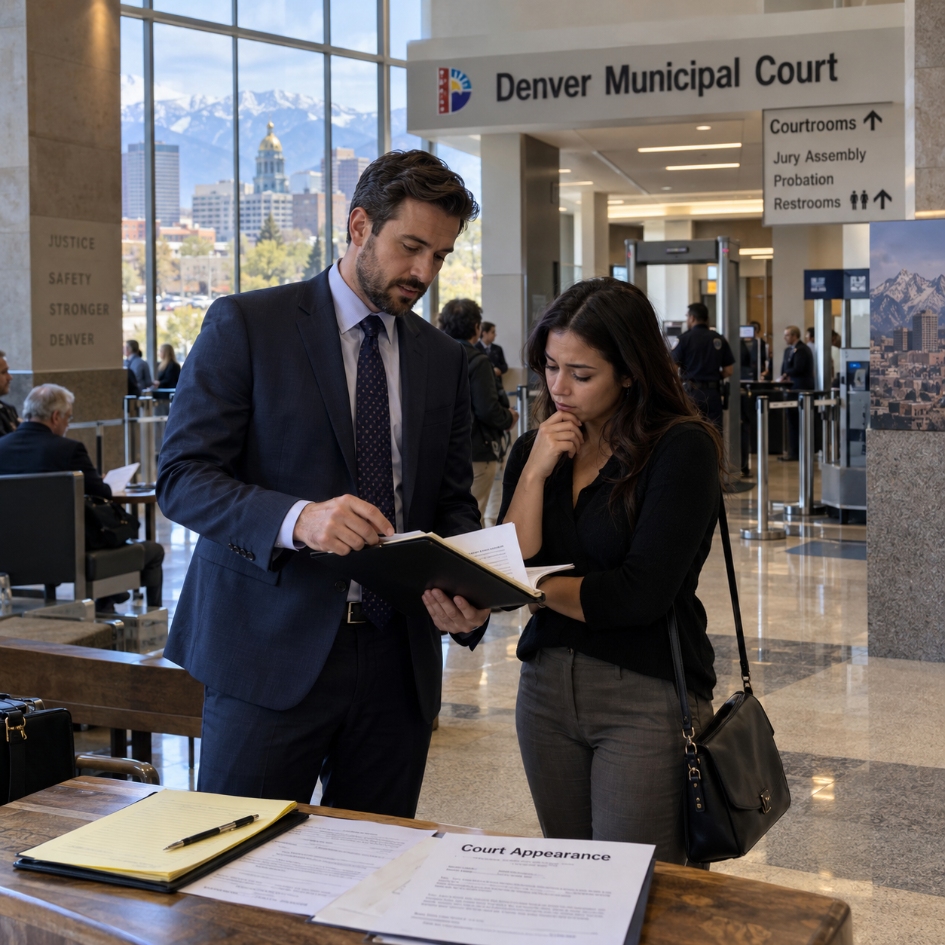
Denver Municipal Court: What to Expect If You’re Facing a Criminal Charge
Receiving a summons, citation, or criminal charge that requires an appearance in Denver Municipal Court can leave you unsure what happens next. We regularly see people underestimate municipal cases because they assume a city ordinance violation is little more than a traffic ticket. Some Denver municipal offenses can carry criminal penalties, including possible jail time, probation, fines, and other court-ordered conditions. The procedure can also involve arraignment, plea negotiations, motions, hearings, and trial. We believe you should understand the charge before entering a plea or making statements that could affect your defense. Knowing what happens in Denver Municipal Court can help you make informed decisions from the beginning of the case.
What Is Denver Municipal Court?
Denver’s court structure differs from the system used in many other Colorado communities. Denver County Court operates as both a county court and a municipal court and hears matters that include city ordinance violations, traffic cases, misdemeanors, and other criminal matters. Municipal cases generally involve alleged violations of the Denver Revised Municipal Code rather than charges filed solely under Colorado’s statewide criminal statutes.
That distinction can affect the prosecuting agency, applicable ordinance, potential punishment, and procedures used in the case. However, a municipal charge should not be dismissed as insignificant simply because the alleged offense comes from a city ordinance.
The Denver Revised Municipal Code establishes criminal offenses covering various forms of conduct, while Colorado law and the Colorado Municipal Court Rules of Procedure provide important procedural protections to defendants.
What Happens at the First Court Appearance?
The first appearance may involve an arraignment or another initial proceeding at which the charge is identified, and the defendant is advised of important rights. Colorado Municipal Court Rule 210 requires advisements concerning rights that can include the right to remain silent, the right to counsel, the right to compulsory process for witnesses, and the right to trial where applicable.
At this stage, we generally want to know exactly what ordinance has been charged, what evidence allegedly supports it, and whether a plea could carry additional legal consequences.
A person should be especially cautious about discussing the facts of the case without understanding how those statements could later be used. An initial court appearance is not the time to assume that explaining the situation informally will make the case disappear.
You May Have a Right to an Attorney
Colorado law provides important protections for people facing possible incarceration in municipal court. Under C.R.S. § 13-10-114.5 and related Colorado municipal-court law, defendants facing qualifying charges involving possible jail sentences have rights concerning legal representation.
Colorado strengthened these protections over time, including requirements for appointed counsel in qualifying cases involving indigent defendants. The General Assembly has also continued revising municipal-court protections. In 2026, Colorado enacted additional measures addressing the right to counsel, access to case information, and opportunities for defense counsel to meet with municipal defendants.
Private counsel can begin evaluating the matter before important decisions are made. We can investigate the allegations, identify weaknesses in the city’s case, communicate with prosecutors, and determine whether to pursue motions or negotiations.
What Types of Charges May Be Heard in Denver Municipal Court?
Denver municipal cases can arise from many different allegations. Depending on the circumstances and the specific ordinance charged, cases can involve conduct such as theft-related allegations, disturbances, trespassing, public fighting, protection-order issues, and other municipal offenses.
Some conduct prohibited by the Denver Revised Municipal Code may resemble offenses also addressed under Colorado state law. That overlap matters because Colorado has enacted limits designed to prevent municipalities from imposing punishment that exceeds applicable state-law limits for comparable conduct.
Denver also revised its own municipal sentencing provisions in 2026. Denver City Council Bill 26-0328 amended portions of the Denver Revised Municipal Code dealing with classifications and penalties for municipal criminal offenses, and the measure was signed by the mayor on July 1, 2026.
Because penalties now depend heavily on the particular offense and its classification, we review the actual ordinance rather than relying on a general statement about what “municipal court” penalties usually are.
What Pleas Can Be Entered?
At arraignment or another appropriate stage, a defendant may enter a plea. In most criminal matters, the principal choices include guilty or not guilty, although particular procedures and negotiated resolutions can vary.
A not-guilty plea allows the case to continue so that the evidence can be reviewed and challenged. It does not mean the defendant is committing to a trial. Cases may later be resolved through dismissal, amendment of charges, negotiations, motions, or trial depending on the facts.
Before advising a client about a plea, we may examine police reports, body-camera recordings, civilian witness statements, photographs, surveillance footage, prior court orders, dispatch records, or other evidence connected with the charge.
Do We Have a Right to a Jury Trial in Denver Municipal Court?
Colorado law provides a right to a jury trial in municipal cases when the defendant is entitled to one under the Constitution or Colorado law. C.R.S. § 13-10-114 provides that a defendant entitled to a jury may request one, and the statute establishes specific procedures for making that request.
One of the most important details is the deadline. Under C.R.S. § 13-10-114(4), the right can be waived if the defendant does not submit the required written jury demand within 21 days after entering a plea and tender the applicable jury fee unless that fee is waived because of indigence.
Colorado Municipal Court Rule 210 likewise requires defendants to be advised about the jury-trial right and the 21-day demand requirement. Missing that deadline can affect how the case is tried. We therefore pay close attention to procedural dates from the outset.
What Happens After a Not-Guilty Plea?
Once a not-guilty plea is entered, the case can proceed through additional court settings. The precise sequence depends on the charge and the issues involved, but there may be pretrial conferences, negotiations, motion hearings, and ultimately a trial if the case is not resolved.
This period is when we can test the prosecution’s evidence. We may examine whether police had legal grounds for a stop or detention, whether statements were constitutionally obtained, whether witnesses can reliably identify the accused, whether video evidence conflicts with a police report, or whether the prosecution can prove every required element of the ordinance.
The city bears the burden of proving a criminal charge. Our role is not simply to accept the government’s version of events. We examine what the evidence actually establishes and what it does not.
Why the Defense Should Begin Before the Case Reaches Trial
Municipal cases can move quickly, and early decisions can affect later options. Evidence may need to be preserved, video may need to be requested, witnesses may need to be identified, and filing deadlines may apply.
We also consider whether the government can prove the mental state required by the ordinance. Some charges depend not only on what allegedly happened but also on whether prosecutors can prove that the defendant acted knowingly, intentionally, recklessly, or with another required state of mind.
A strong defense may focus on identity, intent, credibility, constitutional violations, insufficient evidence, self-defense, defense of another person, lack of notice, or another issue specific to the charge. The correct strategy depends on the facts rather than the name of the offense alone.
Denver Municipal Court Criminal Charge FAQs
Is Denver Municipal Court the Same as Denver County Court?
Denver’s system is unusual because Denver County Court functions in both county and municipal capacities. It handles city ordinance violations as well as other matters within its jurisdiction. The Denver Auditor has described Denver County Court as serving as both a county and municipal court, a structure that differs from many other jurisdictions in Colorado.
For someone accused of an offense, the important question is not simply the name on the courthouse. We want to determine whether the charge arises under the Denver Revised Municipal Code, Colorado state law, or both because that affects the applicable offense, prosecution, sentencing structure, and defense.
Can We Go to Jail for a Denver Municipal Charge?
Some municipal criminal charges can expose a defendant to incarceration, although the maximum potential sentence varies by offense and classification. Denver revised its municipal sentencing laws in 2026, and Colorado law also limits municipal punishment in certain circumstances.
Should We Plead Guilty at the First Court Appearance to Get the Case Over With?
We generally believe a defendant should understand the evidence, potential defenses, sentencing consequences, and collateral effects before deciding how to plead. A guilty plea usually gives up important rights and can result in a conviction.
Can We Request a Jury Trial in Denver Municipal Court?
A jury trial may be available when Colorado law or the Constitution provides that right. Under C.R.S. § 13-10-114, a qualifying defendant must follow specific procedures to preserve the right. Colorado law generally requires the written jury demand and applicable fee within 21 days after the plea unless the fee is waived because of indigence.
What Happens If We Miss a Denver Municipal Court Date?
Missing a required court appearance can create additional problems. Depending on the type of case, the judge may issue orders affecting the defendant’s case or require further action before the matter can proceed.
Can a Denver Municipal Case Be Dismissed?
Dismissal may be possible in an appropriate case, but it depends on the facts and legal issues involved. A case may have problems involving insufficient evidence, an unavailable witness, mistaken identification, an unlawful search or seizure, inadmissible statements, contradictory video evidence, or failure to prove an element of the charged ordinance.
Speak With Our Experienced Denver Criminal Defense Lawyer at Price Criminal Defense
When a municipal criminal charge threatens your record, liberty, or reputation, we believe the defense should be built around the specific evidence rather than assumptions about how a city case will end.
At Price Criminal Defense, our Lead Criminal Defense Attorney, Daniel Butler, brings more than 15 years of Colorado legal experience to criminal defense. Nearly a decade of that career was spent inside Colorado’s criminal justice system. Before moving to defense work, Dan served in prosecution and government positions that included Deputy District Attorney, County Court Supervisor, Assistant City Attorney, and Assistant Director of Prosecution and Code Enforcement.
That background gives us firsthand familiarity with how prosecutors assess evidence, prepare witnesses, make charging decisions, evaluate plea negotiations, and prepare cases for trial. Dan has handled thousands of criminal matters during his career and has participated in approximately 25 trials, primarily jury trials, involving felony, misdemeanor, and municipal cases.
If you are facing a criminal charge in Denver Municipal Court, we can review the ordinance charged against you, explain what happens at your next court appearance, evaluate possible defenses, and discuss the potential consequences of the case. Call Price Criminal Defense at (720) 615-7106 for a free consultation. All calls are answered 24/7. We represent clients in Denver and throughout the surrounding area from our office location in Denver .