Home > Blog > Can a Criminal Record Be Sealed or Expunged in Colorado?
October 15, 2026 | By Price Criminal Defense
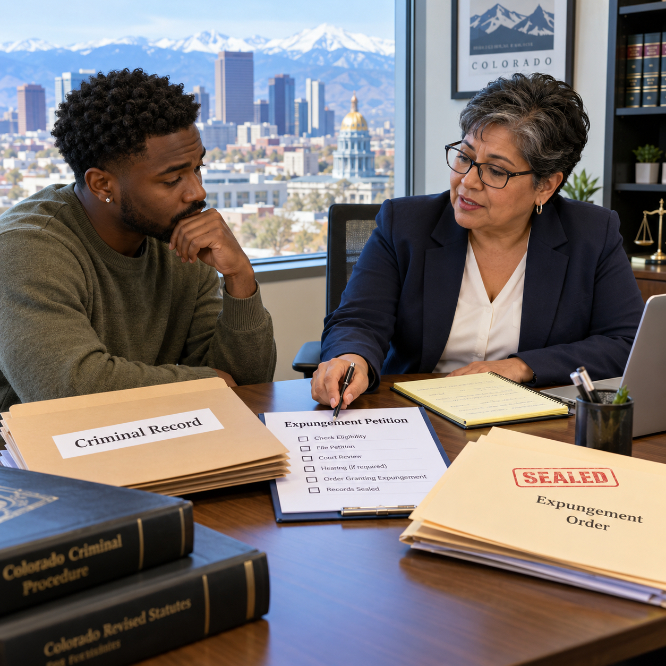
Can a Criminal Record Be Sealed or Expunged in Colorado?
Quick Answer: Can a Criminal Record Be Sealed or Expunged in Colorado?
In Colorado, adult criminal records are generally sealed, while juvenile delinquency records may be expunged. Although people sometimes use the terms interchangeably, Colorado law treats sealing and expungement as different legal processes.
Many criminal records in Colorado are eligible for sealing, including certain arrests, dismissed cases, acquittals, and convictions. Whether a particular record qualifies depends on how the case ended, the offense involved, the person's criminal history, and other requirements under Colorado law.
Sealing a record generally removes it from public access, but it does not physically erase the record. Law enforcement, courts, and certain other government entities may retain access even after the record is sealed.
Understanding these rules matters because sealing an eligible criminal record can reduce the impact that a past case has on employment, housing, and other opportunities.
Key Takeaways for Expungement and Sealing in Colorado
- Colorado generally uses record sealing for adult criminal records and expungement for juvenile delinquency records.
- A sealed record is generally removed from ordinary public background searches, although law enforcement, courts, and certain agencies may retain access.
- Many cases resulting in dismissal or acquittal are eligible for sealing without the waiting periods that apply to convictions, and some records may be sealed automatically.
- Certain convictions—including DUI and DWAI convictions, many sex offenses, crimes of violence, and serious felonies—are generally excluded from Colorado's ordinary conviction-sealing process.
- For eligible convictions, waiting periods commonly range from one to five years, depending on the offense and circumstances.
- Colorado law contains important exceptions, so a conviction that appears ineligible under the general rules may still require an individualized eligibility analysis.
Expungement vs. Sealing in Colorado — What's the Difference?
Colorado generally uses the term sealing for adult criminal records and expungement for juvenile delinquency records.
When a Colorado criminal record is sealed, it is generally no longer available through ordinary public searches. That means most employers, landlords, and private background-check companies should no longer see the sealed case through the usual public criminal-record systems.
However, sealing is not the same thing as destroying the record.
Law enforcement agencies, courts, and certain other government agencies may continue to access sealed records when authorized by law. In some circumstances, a sealed record may also need to be disclosed or may remain relevant for particular occupations, licenses, or legal proceedings.
Juvenile expungement is governed primarily by C.R.S. § 19-1-306. Expungement provides broader protections and generally allows the juvenile and others to indicate that the proceeding never occurred, subject to statutory exceptions.
Which Colorado Records Can Be Sealed?
Whether a criminal record can be sealed depends heavily on how the case ended and, if there was a conviction, the particular offense.
Cases that did not result in a conviction are treated differently from conviction records. Colorado also has separate procedures for certain arrest records, municipal convictions, multiple convictions, pardoned convictions, and convictions for conduct that is no longer illegal.
As a general overview:
| Record Type |
General Sealing Rule |
| Dismissed charges or acquittals |
Often eligible without a conviction waiting period; some may be sealed automatically |
| Arrest with no charges filed |
May qualify under Colorado's arrest-record sealing rules |
| Civil infractions and petty offenses |
Many are eligible after the applicable waiting period |
| Eligible misdemeanors |
Many can be sealed after the applicable waiting period |
| Eligible Class 4, 5, and 6 felonies |
Some can be sealed after the applicable waiting period |
| Certain drug felonies |
Some may qualify |
| DUI/DWAI convictions |
Generally not eligible under the ordinary conviction-sealing statute |
| Class 1–3 felonies |
Generally not eligible, subject to very limited statutory exceptions |
| Crimes of violence and certain other specifically excluded offenses |
Generally not eligible under the ordinary conviction-sealing statute |
This table is only a general guide. Colorado's exclusions are offense-specific, and the eligibility of a particular conviction should be determined by reviewing the actual statute of conviction, sentence, underlying factual basis where relevant, and criminal history.
Which Colorado Convictions Generally Can't Be Sealed?
Colorado law specifically excludes a number of convictions from the ordinary conviction-sealing process.
Examples include certain:
- DUI and DWAI convictions
- Class 1, 2, and 3 felonies, subject to narrow statutory exceptions
- Level 1 drug felonies
- Crimes of violence
- Offenses involving unlawful sexual behavior
- Child abuse and certain offenses against children
- Felony offenses covered by specified provisions of the Victim Rights Act
- Extraordinary risk crimes and offenses involving extraordinary aggravating circumstances
- Certain offenses involving a pregnant victim
- Identity theft offenses
- Certain animal-cruelty offenses
- Certain prostitution- and pandering-related offenses
- Certain convictions whose underlying factual basis involves domestic violence
Importantly, "not eligible under the general rule" does not always end the analysis.
Colorado law provides a potential sealing pathway for certain otherwise-ineligible misdemeanor offenses, including some cases involving domestic violence, if the district attorney consents or if the court makes the findings required by statute.
Because the exclusions and exceptions are detailed, a person should not assume that a record can—or cannot—be sealed based only on the general name of the offense.
How Long Do You Have To Wait To Seal a Record in Colorado?
Waiting periods depend on the type of record and the offense involved.
For an eligible conviction, the applicable period generally runs from the later of the final disposition of the criminal proceeding or the person's release from supervision concerning that conviction.
For a single eligible conviction, the general waiting periods include:
| Disposition or Offense |
General Waiting Period |
| Dismissal or acquittal |
Generally no conviction waiting period |
| Civil infraction, petty offense, or drug petty offense |
1 year |
| Class 2 or 3 misdemeanor or drug misdemeanor |
2 years |
| Class 1 misdemeanor |
3 years |
| Eligible Class 4, 5, or 6 felony |
3 years |
| Certain eligible Level 3 or 4 drug felonies |
Generally 3 years |
| Certain other eligible offenses |
5 years |
Different rules may apply when someone is trying to seal multiple conviction records.
Eligibility can also depend on whether the person has been convicted of another criminal offense during the applicable waiting period. Other statutory requirements, including requirements involving restitution, may also affect eligibility.
Because these rules can become complicated when someone has more than one case, calculating the waiting period should be based on the person's complete criminal history rather than simply the most recent charge.
Which Colorado Records Can Be Sealed Automatically?
Colorado law provides automatic sealing mechanisms for certain eligible criminal records.
Depending on the circumstances, automatic sealing may apply to qualifying arrest or non-conviction records and certain eligible conviction records.
Automatic sealing does not mean that every record that could potentially be sealed will automatically disappear.
The applicable rules depend on the disposition, offense, date, and other statutory requirements. Colorado also has procedures allowing prosecutors to object to automatic sealing in circumstances permitted by law.
If you believe your case should have been automatically sealed, it is worth confirming the status of the case rather than assuming the record has been removed from public view.
How Do You Seal a Criminal Record in Colorado?
The procedure depends on the type of record involved.
For a conviction that requires a motion, the process generally includes:
- Review Your Criminal History: Identify the exact case or cases you want to seal and how each one was resolved.
- Determine Eligibility: Confirm that the offense is eligible and that the applicable waiting period and other statutory requirements have been satisfied.
- File the Appropriate Motion or Petition: Colorado Judicial Branch provides different forms depending on whether the record involves a conviction, non-conviction, arrest without charges, municipal case, or multiple cases.
- Provide Required Notice: The prosecutor and other parties receive notice as required by the applicable sealing statute.
- Respond to Any Objection: Depending on the type of case, the prosecutor may have an opportunity to object.
- Attend a Hearing if Necessary: Some cases can be decided without a hearing. In others, the court may hold a hearing before determining whether sealing is appropriate.
- Obtain the Sealing Order: If sealing is granted, the court's order directs the appropriate custodians of the criminal justice records to seal them as required by law.
Not every case requires a traditional petition. Some non-conviction records use a simplified process, and some qualifying records are automatically sealed.
How Much Does It Cost To Seal a Record in Colorado?
The cost depends on the type of sealing procedure.
Colorado Judicial Branch currently lists a $65 processing fee for a motion to seal a criminal conviction under C.R.S. § 24-72-706.
Other procedures have different fees. For example, Colorado Judicial Branch currently lists no filing fee for a petition to seal non-conviction criminal records under C.R.S. § 24-72-705, while some other record-sealing petitions may carry a different filing fee.
Additional costs may arise if you need to obtain criminal-history reports or other documents.
Attorney fees are separate and vary depending on the complexity of the case, whether multiple records are involved, and whether the prosecutor contests the request.
What Changes After Your Record Gets Sealed?
Sealing generally prevents the public from accessing the criminal record through ordinary public-record searches.
That can make an important difference in employment, housing, and other situations in which a criminal background check might otherwise reveal the case.
However, sealing does not mean the underlying record has literally ceased to exist.
Some important considerations include:
- Employment: In many circumstances, a person whose record has been sealed may state that the sealed case did not occur, subject to statutory exceptions.
- Housing: A properly sealed record generally should not appear in an ordinary public criminal-background search conducted by a landlord or screening company.
- Professional Licensing: Certain agencies or licensing authorities may have access to information that is unavailable to the general public, depending on the applicable law.
- Firearm Rights: Sealing a criminal conviction does not, by itself, restore firearm rights that were lost because of the conviction.
- Immigration: State record sealing does not erase a conviction or other criminal history for federal immigration purposes. Non-citizens should obtain immigration advice before assuming that sealing eliminates the immigration consequences of a case.
Juvenile Record Expungement in Colorado
Colorado generally uses expungement rather than sealing for juvenile delinquency records.
Under C.R.S. § 19-1-306, qualifying juvenile records may be expunged so that, for most purposes, the proceedings are treated as though they never occurred.
Colorado law provides different eligibility rules depending on how the juvenile case ended.
Some records can be eligible for expungement immediately, including qualifying cases resulting in dismissal or a finding of not guilty. Other juvenile records may become eligible after completion of the sentence or after an applicable waiting period.
Certain juvenile records are excluded from expungement or subject to additional restrictions. Because juvenile eligibility depends heavily on the type and disposition of the case, the individual record should be reviewed before determining whether expungement is available.
Colorado law also provides automatic expungement procedures for certain qualifying juvenile records.
Do You Need a Lawyer to Seal a Record?
Colorado does not require everyone seeking record sealing to hire an attorney.
Some straightforward cases—particularly uncomplicated non-conviction records—may be handled using forms provided by the Colorado Judicial Branch. Other qualifying records may be sealed automatically without the person filing anything.
But sealing can become significantly more complicated when there are:
- Multiple criminal cases;
- Convictions from different jurisdictions;
- Companion charges with different dispositions;
- Questions about whether an offense falls within a statutory exclusion;
- Domestic-violence findings;
- Prosecutorial objections; or
- Disputes about whether the statutory requirements have been satisfied.
Court staff can provide forms and procedural information, but they cannot provide legal advice.
An attorney can review the complete criminal history, determine which statutory procedure applies, identify potentially sealable records, and address objections or unusual eligibility issues.
FAQ for Expungement and Sealing in Colorado
Can a DUI Be Expunged or Sealed in Colorado?
A Colorado DUI or DWAI conviction generally is not eligible for sealing under Colorado's ordinary conviction-sealing statute.
However, the disposition of the case matters. A case involving a DUI charge that did not result in a DUI or DWAI conviction may require a different analysis. For that reason, it is important to distinguish between a DUI arrest or charge and an actual DUI or DWAI conviction.
How Long Before I Can Seal a Misdemeanor in Colorado?
For an eligible single conviction, the waiting period generally depends on the classification of the misdemeanor.
An eligible Class 2 or Class 3 misdemeanor generally has a two-year waiting period, while an eligible Class 1 misdemeanor generally has a three-year waiting period.
The statutory period generally runs from the later of the final disposition of the case or release from supervision concerning the conviction. Other requirements may also affect eligibility.
Do Sealed Records Show Up on Background Checks?
A properly sealed Colorado criminal record generally should not appear through ordinary public criminal-record searches used by most employers, landlords, and private background-check companies.
However, sealing does not destroy the record. Courts, law enforcement, and certain government agencies may retain access as authorized by law.
Can I Say "No" to a Criminal Record Question After Sealing?
Colorado law generally permits a person and certain criminal justice agencies to state that a properly sealed criminal record does not exist, subject to statutory exceptions.
Some employment, licensing, government, or legal situations may be treated differently. Whether disclosure is required therefore depends on who is asking and why.
How Much Does It Cost To Seal a Record in Colorado?
The cost depends on the type of record and procedure.
Colorado Judicial Branch currently lists a $65 processing fee for a motion to seal a criminal conviction. Non-conviction sealing and other procedures may have different fee rules.
Attorney fees, if an attorney is retained, are separate.
Can Felonies Be Sealed in Colorado?
Some felony convictions can be sealed, but not all of them.
Certain eligible Class 4, Class 5, and Class 6 felony convictions and certain eligible drug-felony convictions may qualify after the applicable waiting period.
Colorado law excludes many other felony convictions from ordinary sealing, including most Class 1, Class 2, and Class 3 felonies, level 1 drug felonies, crimes of violence, and numerous specifically identified offenses.
Because Colorado's exclusions are detailed, felony eligibility should be determined by examining the specific statute of conviction and the circumstances of the case rather than simply labeling an offense "violent" or "nonviolent."
Does Sealing Restore My Gun Rights?
No. Sealing a criminal record does not automatically restore firearm rights.
Record sealing and restoration of firearm rights are separate legal issues. If a conviction affected your right to possess a firearm, sealing the record alone should not be assumed to remove that restriction.
If My Charges Were Dismissed, Do I Still Need To File?
Not necessarily.
Colorado provides automatic or simplified sealing procedures for certain cases that do not result in a conviction. Whether you need to take action depends on the disposition and whether the record has already been sealed.
If your case was dismissed, it is a good idea to confirm that the record was actually sealed rather than assuming that dismissal automatically removed every record from public view.
Ready To Clear Your Colorado Record?
A criminal record can affect employment, housing, professional opportunities, and other parts of your life long after a case ends.
Colorado has significantly expanded record-sealing opportunities over the years, and some people who assume their records can never be sealed may actually qualify under current law.
At the same time, Colorado's sealing statutes contain detailed exclusions, exceptions, waiting periods, and separate procedures for different types of records. Determining eligibility requires looking at the actual charges, dispositions, dates, and criminal history involved.
Price Criminal Defense can review your record and help determine which records may qualify for sealing or expungement.
Call
Price Criminal Defense at
(720) 615-7106 for a
free consultation. All calls are answered 24/7. We represent clients in
Denver and throughout the surrounding area.