Home > Blog > Can You Be Charged With Assault in Colorado If You Didn’t Throw the First Punch?
October 15, 2026 | By Price Criminal Defense
Can You Be Charged With Assault in Colorado If You Didn’t Throw the First Punch?
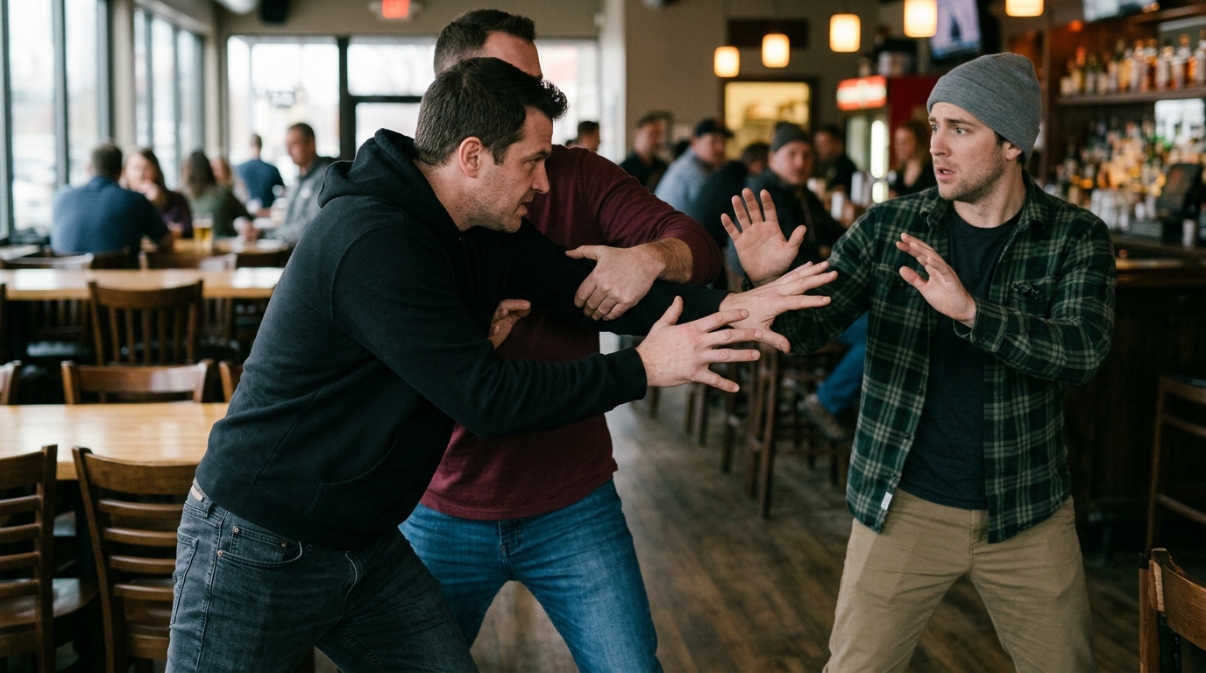
Fights can break out quickly, but figuring out who committed a crime is not just about who hit first. We often see cases where one person claims self-defense, yet Denver police arrest both people or the one who caused more injury. Colorado law lets someone use reasonable force to defend against unlawful force, but there are limits. We have to look at who started the fight, what each person believed was happening, how much force was used, and if the threat was over before more force was used. Even if someone else hit first, prosecutors might still charge assault if they think the response went beyond what Colorado’s self-defense law allows. That’s why we review the whole situation, not just a single punch.
Not Throwing the First Punch Does Not Automatically Prevent an Assault Charge
In Colorado, there is no rule that says the person who throws the first punch is always guilty and everyone else is innocent. Instead, we look at whether the accused person caused an injury on purpose, by being reckless, or through criminal negligence under the assault laws, and whether their use of force was legally justified.
Third-degree assault under Colorado Revised Statutes § 18-3-204 can occur when a person knowingly or recklessly causes bodily injury to another person. It can also apply when criminal negligence causes bodily injury through the use of a deadly weapon. Third-degree assault is classified as a class 1 misdemeanor. So, even if someone is hit first, they could still be accused of third-degree assault if police think their response caused injury and was not justified as self-defense.
Colorado Self-Defense Law Can Protect Someone Who Was Attacked First
Colorado Revised Statutes § 18-1-704 provides the primary self-defense rule. We may use physical force against another person when we reasonably believe that person is using, or is about to use, unlawful physical force against us or another person. The statute also limits the amount of force to the degree reasonably believed necessary under the circumstances.
This is one of the most important issues when someone else threw the first punch.
Suppose another person suddenly punches someone in a parking lot and continues moving toward that person aggressively. If the person who was struck responds with enough force to stop the attack, self-defense may apply. The question is not simply whether physical force was used. We look at why it was used and whether the amount of force reasonably corresponded to the threat.
Colorado appellate courts have emphasized that lawful self-defense depends on a reasonable belief that unlawful force is being used or is imminent and that the responsive force is reasonably necessary.
The Initial Aggressor Issue Can Be More Complicated Than the First Punch
The phrase “first punch” can be misleading because Colorado law also considers who was the initial aggressor. Under C.R.S. § 18-1-704(3), self-defense may be unavailable in certain circumstances, including when a person intentionally provokes unlawful force with the intent to cause bodily injury or death or when that person is the initial aggressor, subject to statutory exceptions.
Colorado courts have explained that an initial aggressor can be someone who begins a physical conflict by using or threatening the imminent use of unlawful physical force. A person therefore does not necessarily have to land the first punch to create an initial-aggressor issue.
For example, if someone aggressively advances while threatening immediate violence and tries to strike another person but misses, that conduct can become relevant even if the other person technically lands the first blow.
When we defend an assault case, we reconstruct what happened before physical contact began. Witness testimony, surveillance footage, cellphone recordings, text messages, body-camera footage, and statements made immediately after the confrontation can become critical.
Self-Defense Does Not Allow Unlimited Retaliation
Another major issue is the difference between defending ourselves and retaliating after the threat has passed. C.R.S. § 18-1-704 permits the degree of force that a person reasonably believes is necessary for self-defense. That does not create an unlimited right to continue striking someone simply because that person started the fight.
Consider a situation where someone throws one punch, falls to the ground, and no longer poses an immediate threat. If the other person continues hitting or kicking that individual after the danger has ended, prosecutors may argue that the later force was retaliation rather than self-defense. We therefore pay close attention to timing. A few seconds can make a substantial difference in how prosecutors characterize a confrontation.
Serious Injuries Can Lead to Felony Assault Charges
The severity of the alleged injury and the manner in which it was caused can raise the stakes considerably. Colorado Revised Statutes § 18-3-202 addresses first-degree assault. Among other circumstances, it covers intentionally causing serious bodily injury with a deadly weapon and certain conduct intended to cause serious and permanent disfigurement or disability. First-degree assault is ordinarily a class 3 felony, although Colorado law contains different classifications and sentencing provisions for certain circumstances.
Second-degree assault under C.R.S. § 18-3-203 includes several forms of conduct. For example, it can apply when a person intends to cause bodily injury and causes that injury with a deadly weapon, recklessly causes serious bodily injury with a deadly weapon, or intentionally causes bodily injury that results in serious bodily injury under specified provisions of the statute. Many forms of second-degree assault are class 4 felonies.
When serious injuries or weapons are involved, we examine self-defense especially carefully because the potential criminal penalties become much greater.
Evidence Can Determine Whether Police and Prosecutors Believe Self-Defense
Assault cases frequently involve conflicting stories. One person says the other attacked first. The other person says exactly the opposite. Police may arrive after the physical confrontation is already over.
We therefore look for evidence that can establish what actually happened. Useful evidence may include surveillance video, cellphone recordings, photographs of injuries, torn clothing, damaged property, 911 recordings, witness statements, text messages, social media communications, and police body-camera footage.
We also examine whether the physical evidence fits the statements given by the people involved. An independent witness or a few seconds of video can completely change how the events are understood.
Arrest Does Not Mean Self-Defense Has Been Rejected
Police officers often have to make rapid decisions after receiving conflicting accounts. An arrest does not necessarily mean that self-defense cannot later become central to the case.
When evidence sufficiently raises self-defense in an appropriate case, Colorado law can require the prosecution to disprove self-defense beyond a reasonable doubt. Colorado appellate courts continue to recognize that principle when the defense is properly placed at issue.
Our job is to identify the evidence that supports the defense, challenge evidence that does not withstand scrutiny, and present the complete sequence of events rather than allowing the case to be reduced to who suffered the more visible injury.
FAQs About Denver Assault Charges and Self-Defense
Can Someone Be Arrested Even If the Other Person Hit First?
Yes. Police can make an arrest even when the person arrested says someone else started the fight. Officers may receive conflicting accounts, arrive after the confrontation, or believe that the person claiming self-defense used more force than reasonably necessary. We do not treat the arrest decision as the final word on what happened.
What If Someone Hit Back Several Times After Being Punched Once?
That does not automatically establish guilt, but it creates an important factual question. Colorado self-defense law focuses on whether the degree of force used was reasonably believed necessary. We therefore examine what was happening during the entire confrontation.
Can Words Make Someone the Initial Aggressor?
Words alone do not necessarily make someone the initial aggressor, but threats and conduct can matter. Colorado courts have described an initial aggressor as someone who initiates a physical conflict by using or threatening the imminent use of unlawful physical force.
Can Self-Defense Apply to Third-Degree Assault?
Yes. Third-degree assault cases frequently raise self-defense issues because C.R.S. § 18-3-204 broadly covers knowingly or recklessly causing bodily injury. The existence of an injury does not by itself establish that the use of force was unlawful. If the injury occurred while someone was reasonably defending against unlawful physical force, C.R.S. § 18-1-704 may become central to the defense. We examine whether the threat was imminent, whether the accused reasonably perceived the threat, and whether the amount of force used was reasonably necessary.
Call Price Criminal Defense for a Free Assault Case Consultation
When an assault accusation grows out of a fight, the prosecution’s version of events may tell only part of the story. We examine who initiated the confrontation, whether unlawful force was threatened or used, whether our client was defending against an immediate attack, how long the confrontation lasted, and whether the physical evidence supports the accusations.
At Price Criminal Defense, our lead assault defense attorney, Daniel Butler, has over 15 years of experience practicing law in Colorado and has spent nearly a decade working within the Colorado criminal justice system. That background gives us direct knowledge of how prosecutors evaluate assault allegations, witness credibility, self-defense claims, injuries, videos, police reports, and trial evidence. Dan has also handled numerous criminal trials, primarily jury trials, involving felony, misdemeanor, and municipal matters.
If you have been arrested, charged, or are under investigation for assault after a fight in Denver or the surrounding area, we can review what happened and determine whether self-defense, defense of another person, lack of intent, mistaken identification, conflicting testimony, or another defense may apply.
Call Price Criminal Defense at (720) 615-7106 for a free consultation. Our calls are answered 24/7, and we represent clients throughout the Denver area from our office locations in Denver, Colorado.