Home > Blog > Can You Refuse a Breathalyzer or Blood Test After a DUI Arrest in Colorado?
November 3, 2026 | By Price Criminal Defense
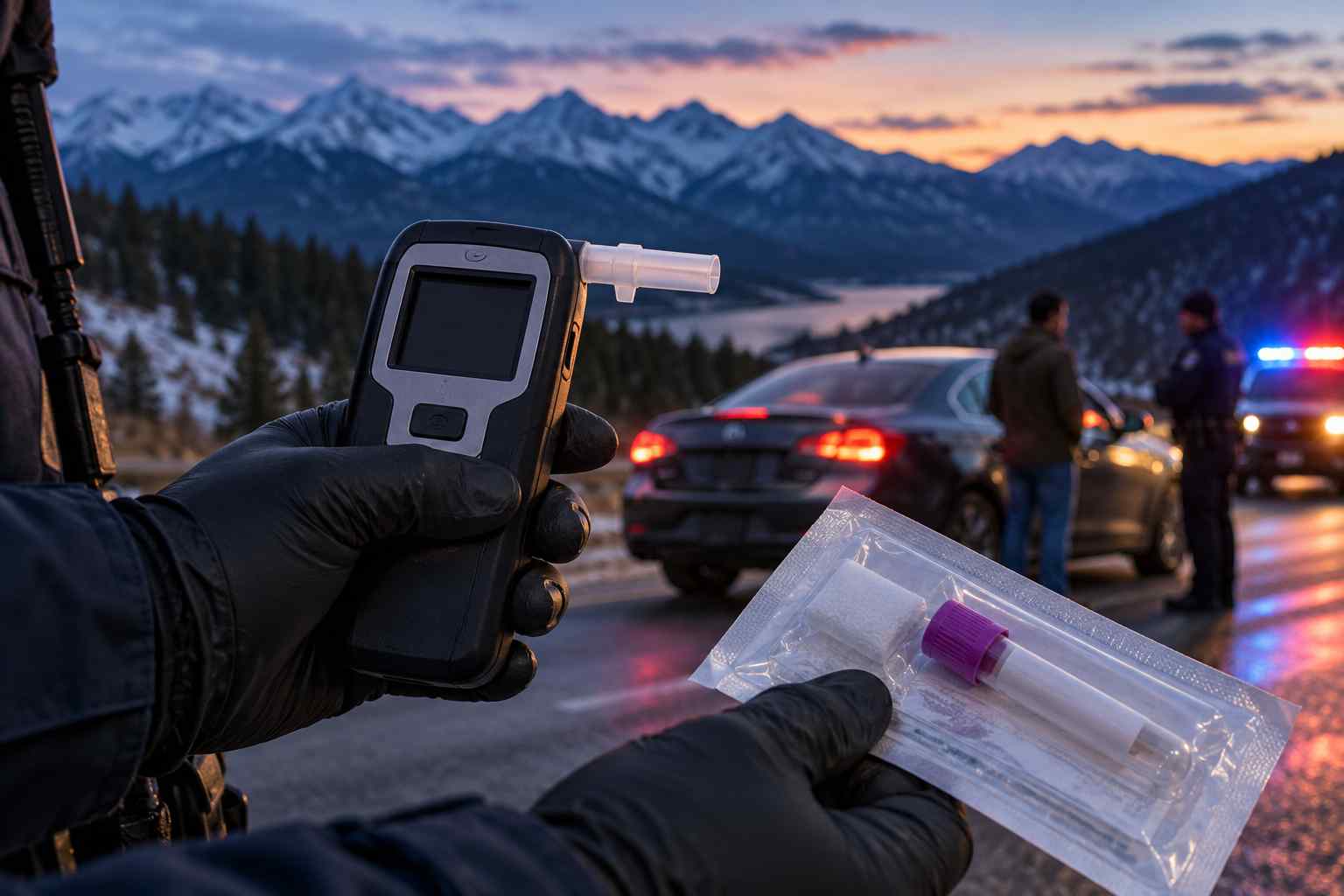
Can You Refuse a Breathalyzer or Blood Test After a DUI Arrest in Colorado?
A request to take a breath or blood test after a Colorado DUI arrest carries consequences that are separate from the criminal charge itself. We often find that drivers confuse roadside breath testing with the evidentiary chemical testing requested after an officer has developed probable cause for DUI, DUI per se, or DWAI.
Under Colorado law, those are not the same thing. Once the state’s expressed consent law applies, refusing to complete a required breath or blood test can trigger a driver’s license revocation even if the DUI charge is later reduced or dismissed. A refusal may also become evidence in the criminal case. For that reason, we examine not only whether a driver refused testing, but also whether police properly invoked the law and followed the required procedures.
Colorado’s Expressed Consent Law
Colorado Revised Statutes § 42-4-1301.1 establishes what is commonly called the state’s expressed consent law. By driving a motor vehicle in Colorado, a person is deemed to have consented to chemical testing under the circumstances defined by the statute. When an officer has probable cause to believe a driver committed DUI, DUI per se, DWAI, or certain related offenses, the driver can be required to take and complete a breath or blood test.
For most drivers age 21 or older in an alcohol-related case, the statute generally allows the driver to select a blood test or a breath test. Once a driver makes that selection, Colorado law generally does not allow the driver to switch tests simply because the driver changes his or her mind. Failure to take, complete, or cooperate with the selected test can be treated as a refusal.
This is one reason we pay close attention to exactly what the officer said, what choice was offered, and how the driver’s response was recorded.
Roadside Breath Tests Are Different From Evidentiary Breath Tests
Drivers should understand the distinction between a preliminary roadside breath test and the evidentiary breath test requested under the expressed consent law.
Colorado enacted legislation in 2026 requiring officers, in certain crashes involving death or suspected serious bodily injury, to offer drivers a voluntary preliminary alcohol screening test and advise them that they may refuse that preliminary test. That law took effect August 12, 2026.
That preliminary screening procedure should not be confused with a post-arrest or probable-cause chemical test under C.R.S. § 42-4-1301.1. Once the expressed consent statute applies, refusing the required evidentiary test can create substantial DMV consequences.
What Happens If We Refuse the Test?
A refusal does not mean that police simply end the DUI investigation. Under C.R.S. § 42-2-126, the Colorado Department of Revenue can revoke a driver’s license based on a refusal to submit to testing. For a first refusal, the statutory revocation period is one year. A second refusal carries a two-year revocation, while a third or subsequent refusal carries a three-year revocation.
These administrative consequences are important because they can proceed separately from the DUI prosecution. A driver may therefore face a DMV case involving driving privileges at the same time that a criminal DUI or DWAI case is pending in court. We examine both matters because a successful argument in one proceeding does not necessarily resolve the other.
Can a Refusal Be Used Against Us in Court?
Yes. Colorado law expressly allows evidence of a refusal to be introduced in a DUI or DWAI trial.
C.R.S. § 42-4-1301 provides that when a person refuses to take, complete, or cooperate with chemical testing and later goes to trial for DUI or DWAI, evidence of that refusal may be admitted. The statute also provides that the defendant may not rely on the privilege against self-incrimination to prevent admission of the refusal evidence.
Prosecutors may argue that a refusal reflects consciousness of guilt. We do not automatically accept that interpretation. Depending on the facts, there may be other explanations for what occurred, including confusion, medical issues, communication problems, uncertainty about the officer’s instructions, or a dispute about whether the driver’s conduct legally amounted to a refusal.
What Counts as Refusing a Breath or Blood Test?
A refusal does not always consist of a driver clearly saying, “No.”
Under C.R.S. § 42-4-1301.1, failing to complete the test or failing to cooperate sufficiently for the sample to be collected can also be treated as a refusal. Colorado law generally requires a requested breath or blood sample to be obtained within two hours of driving.
This can create factual disputes. A person might attempt to provide a breath sample but allegedly provide an insufficient sample. A driver may have a medical condition that makes a breath test difficult. An injured driver may be undergoing treatment in a hospital where a certified breath-testing device is unavailable.
The statute addresses some of those circumstances. If a driver cannot complete a breath test because of injury, illness, disease, physical infirmity, incapacity, or certain medical-treatment circumstances, blood testing may be required instead. We review the circumstances carefully before accepting the officer’s description of the event as a lawful refusal.
Can Police Force a Blood Draw?
The answer depends heavily on the circumstances.
Colorado’s expressed consent statute contains specific provisions addressing circumstances in which blood testing may be required notwithstanding a driver’s refusal, including certain serious offenses. Constitutional search-and-seizure principles can also affect whether police may obtain blood evidence.
Because forced blood draws involve both statutory and Fourth Amendment issues, we examine whether officers had the required legal authority, whether a warrant was obtained when necessary, what offense was being investigated, and whether the collection complied with governing law. A forced blood draw is therefore not simply an automatic consequence of every DUI refusal.
Can We Challenge a Refusal?
Yes. A refusal determination can sometimes be challenged.
Questions may include whether the officer had probable cause to invoke the expressed consent law, whether the required advisement was properly given, whether the driver actually refused, whether a medical condition prevented compliance, whether police gave conflicting instructions, or whether administrative procedures were followed correctly.
We also examine dash-camera and body-camera recordings whenever they are available. Those recordings can be particularly important when the officer’s written report describes a refusal differently from what actually occurred.
Early Action Matters After a Colorado DUI Refusal
A DUI arrest involving a refusal can produce two immediate legal problems: the criminal prosecution and the administrative driver’s license case. Waiting to address one while focusing only on the other can create unnecessary problems.
We review the traffic stop, probable cause, test request, officer advisements, alleged refusal, available video, and the underlying evidence of impairment. The goal is to determine which parts of the government’s case are legally and factually supportable and which parts should be challenged.
Denver DUI Defense After a Breath or Blood Test Refusal
At Price Criminal Defense, we know that refusal cases often turn on details that are easy to overlook in an arrest report. The precise wording of the officer’s instructions, the driver’s response, the timing of the request, video evidence, medical circumstances, and the basis for probable cause can all affect how we evaluate the case.
Lead DUI Defense Attorney Daniel Butler brings more than 15 years of Colorado legal experience to that analysis. Before representing people accused of crimes, Dan spent nearly a decade working inside Colorado’s criminal justice system. His prior work included serving as a Deputy District Attorney, County Court Supervisor, Assistant City Attorney, and Assistant Director of Prosecution and Code Enforcement. He has handled thousands of criminal matters and has participated in approximately 25 trials, most of them jury trials.
That background matters in a DUI refusal case because we understand how prosecutors assess chemical-test evidence, refusal evidence, police testimony, and weaknesses in the government’s proof. We use that perspective to prepare the defense from the beginning rather than treating the DMV and criminal proceedings as routine paperwork.
Call Price Criminal Defense For Your Free DUI Defense Consultation
If you were arrested for DUI or DWAI in Denver and accused of refusing a breath or blood test, we can review the criminal charge, the driver’s license consequences, and the circumstances surrounding the alleged refusal.
Call Price Criminal Defense at (720) 615-7106 for a free consultation. All calls are answered 24/7. Our Denver DUI attorneys represent clients in Denver and throughout the surrounding area from our office location in Denver.